



PCD vs. Natural Diamond vs. Tungsten Carbide Dies: Which Is Best for You?
Wire drawing dies are critical tools in manufacturing industries that require fine wire production. Whether you’re working with tungsten filament, copper wire, stainless steel wire, or precious metal wire, selecting the right type of die can significantly affect both the production process and the final product quality. Juxin offers a range of diamond drawing dies, including PCD, natural diamond, and tungsten carbide dies, each with its unique advantages. In this article, we compare these three types of dies to help you choose the best option for your specific application.
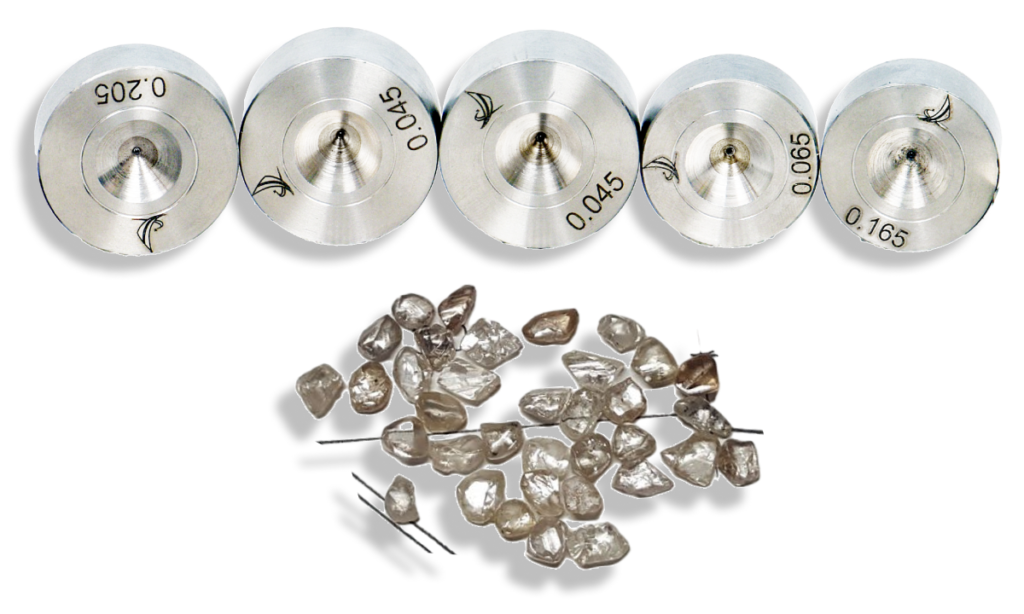
PCD Dies: Durability and Performance for High-Volume Applications
PCD, or Polycrystalline Diamond, is a synthetic material that provides excellent wear resistance and durability. PCD dies are often the preferred choice for high-volume wire drawing operations, particularly when working with softer metals like copper and aluminum. These dies are ideal for situations where long-lasting performance and cost-effectiveness are key. They also offer consistent drawing performance with lower energy consumption, making them an excellent choice for reducing overall operational costs.
However, PCD dies are best suited for applications that do not require the ultra-fine wire finishes that natural diamond can provide. While they are durable, they may not deliver the smoothest surface quality compared to other die materials.
Natural Diamond Dies: Precision and Surface Quality for Specialized Applications
For applications where wire precision and a smooth surface finish are paramount, natural diamond wire drawing dies are often the material of choice. Natural diamond has a natural edge in terms of its ability to draw wire with minimal friction, ensuring that the wire surface remains smooth and of high quality. This makes diamond wire drawing dies highly effective for fine and ultra-fine wire applications, such as medical wire and bonding wire (gold, copper, and aluminum).
The superior precision of natural diamond makes it an ideal material for wires that will be used in sensitive applications where surface defects can lead to failure. While natural diamond dies can be more expensive than other materials, their longevity and the high-quality finish they provide often justify the investment.
Tungsten Carbide Dies: Robust and Cost-Effective for Tougher Materials
For wire drawing operations that involve harder metals, such as stainless steel wire or high-performance alloy wire, tungsten carbide dies offer a reliable and cost-effective solution. While they may not offer the same surface finish quality as natural diamond or PCD, tungsten carbide dies are highly durable and can withstand the stresses associated with drawing tougher materials.
Tungsten carbide is also a more affordable option compared to natural diamond, making it an appealing choice for businesses that need reliable dies but are operating with tighter budgets. Although tungsten carbide dies may not provide the same level of smoothness or finish as diamond drawing dies, they are still effective for a wide variety of wire types and applications.
Conclusion
Choosing the right diamond drawing dies process largely depends on your specific needs, including the type of wire you’re working with, the desired surface finish, and your budget. PCD dies are ideal for high-volume applications with non-ferrous metals, offering excellent durability at a reasonable cost. Natural diamond dies are ideal for applications that demand high precision and a smooth surface, such as in medical and bonding wires. Tungsten carbide dies provide a robust, cost-effective solution for tougher materials, making them suitable for harder metals like stainless steel.
 English
  Chinese
  Spanish