



SCD vs. PCD Drawing Dies: What’s the Real Difference
In the wire manufacturing industry, selecting the right drawing die is essential for achieving high-quality, precise wire products. Troquel de Trefilado SCD (single crystal diamond) and PCD drawing die (polycrystalline diamond) are two of the most commonly used materials in fine wire drawing. Both have unique characteristics that make them suitable for different applications. In this article, we will explore the key differences between SCD vs. PCD drawing dies, focusing on their material composition, performance, and durability, and how Juxin plays a role in providing these high-quality drawing dies.
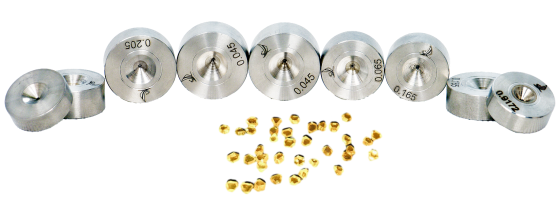
Material Composition: Single Crystal Diamond vs. Polycrystalline Diamond
One of the main differences between SCD drawing die and PCD drawing die lies in their material composition. Single crystal diamond (SCD) is made from a single, continuous crystal structure, providing exceptional strength and wear resistance. The uniformity of the crystal allows for more predictable wear patterns, leading to a longer life and better recutting ability.
On the other hand, single crystal diamond die for fine wire is made from multiple smaller crystals that are sintered together. This gives PCD a lower cost compared to SCD, but also impacts its performance in certain applications. While PCD is highly durable, it tends to have less predictable wear patterns, and its recutting ability is not as superior as that of SCD. Juxin, known for its high-quality SCD drawing die, ensures that users get reliable and consistent results in fine wire drawing applications.
Performance and Durability in Fine Wire Drawing
The performance and durability of SCD and PCD drawing dies are crucial when drawing fine wires, such as gold, copper, and medical wires. The wear patterns of SCD are highly predictable, which makes it easier to plan for maintenance and recutting. SCD drawing die is ideal for high-precision applications like medical wire (e.g., stainless steel and nitinol wires) and ultra-fine coaxial wires used in electronics and communication.
PCD drawing dies, while durable, may not offer the same consistency in wear. However, they are often chosen for larger scale applications where cost efficiency is a priority, and wear patterns are less critical. Juxin offers both SCD and PCD drawing dies to cater to different performance needs, ensuring that users can choose the right die for their specific wire drawing requirements.
Choosing the Right Die: SCD or PCD
When selecting between SCD and PCD drawing dies, several factors must be considered. The choice largely depends on the type of wire being drawn, the desired level of precision, and the available budget. For high-precision applications, such as bonding wire (gold, copper, aluminum), Juxin’s SCD drawing die is the preferred choice due to its exceptional wear resistance and recutting ability.
For more cost-effective solutions, PCD drawing dies are a suitable option. Juxin offers a variety of PCD dies for general-purpose wire drawing, which works well for non-precision applications. Understanding the specific needs of the wire drawing process is key to selecting the appropriate die.
Conclusion
In conclusion, both SCD drawing die and PCD drawing die have their advantages, and the choice between the two depends on the specific requirements of the wire drawing process. SCD is ideal for high-precision, high-durability applications, while PCD offers a more cost-effective solution for general purposes. With Juxin offering both types of drawing dies, users can find the right solution for their needs, ensuring high-quality and efficient wire drawing.
 English
  Chinese
  Spanish